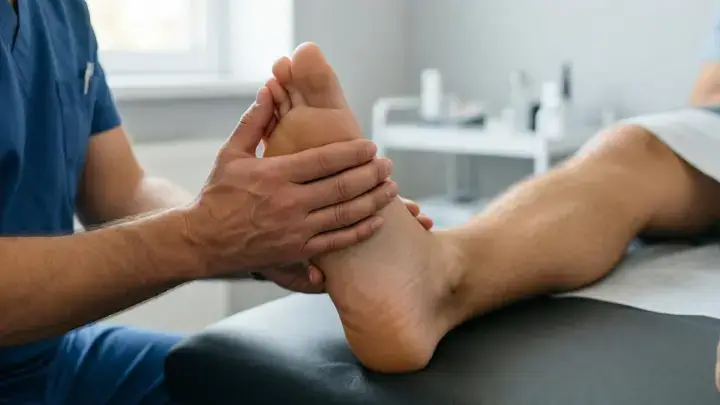

There are words that arrive with a clear definition, words that carry centuries of history, and then there are words that seem to have appeared almost out of nowhere. Shropadis belongs firmly to the third category.
It looks almost familiar. The spelling suggests a profession, a cultural term, perhaps even a name for a particular practice. Yet when the word is examined closely, the trail becomes surprisingly thin. There is no well-established public biography attached to it, no widely recognized institution carrying the name, and no authoritative dictionary definition that gives “shropadis” a settled meaning.
That uncertainty is important.
Rather than turning the unfamiliar word into a fictional person, invented tradition, or imaginary cultural movement, it makes more sense to examine what the term may actually represent. The strongest identifiable connection is to chiropodist, a long-established term for a professional who diagnoses and treats conditions affecting the feet. In the United Kingdom, the Health and Care Professions Council recognizes both “chiropodist” and “podiatrist” as protected titles.
That discovery changes the story completely.
What initially looks like a mysterious subject may instead be an example of how language becomes distorted online. A typo can become a search term. A misspelling can acquire its own digital footprint. A word that began as an error can eventually look authoritative simply because it appears repeatedly.
The story of shropadis, then, is less about a person or a hidden tradition and more about the fascinating distance that can develop between a word’s appearance and its actual meaning.
| Fact | Details |
|---|---|
| Term | Shropadis |
| Established dictionary status | No confirmed mainstream definition located |
| Most plausible connection | Chiropodist / chiropody |
| Chiropodist meaning | A regulated foot-care profession in the UK |
| Alternative professional term | Podiatrist |
| UK regulatory body | Health and Care Professions Council (HCPC) |
| UK title status | “Chiropodist” and “Podiatrist” are protected titles |
| Person associated with “Shropadis” | No confirmed public record |
| Birth information | Not applicable / no confirmed public record |
| Nationality | Not applicable |
| Profession | No confirmed profession attached to the term itself |
| Active years | No confirmed public record |
| Net worth | Not applicable |
| Marital status | Not applicable |
| Spouse | Not applicable |
| Children | Not applicable |
| Notable works | No confirmed works attributed to “Shropadis” |
| Established achievements | No confirmed public record |
| Related professional field | Chiropody / podiatry |
When a Strange Word Starts Looking Familiar
The internet has an unusual ability to make unfamiliar things appear established.
A phrase can be repeated across several websites, copied into titles, included in headings, or reproduced in social posts. After enough repetition, a reader may assume that the word must have a recognized meaning.
But repetition and verification are not the same thing.
That distinction matters with shropadis. Several pages appearing online use the word as though it represents a defined concept, while others associate it with completely different subjects. One version describes it as a culinary term, another presents it as a supposed tradition, and still others use it within discussions of online identities. None of those conflicting descriptions provides a reliable foundation for treating “shropadis” as an established concept.
This is precisely where a careful editorial approach becomes useful.
Instead of asking, “What elaborate story can be built around this word?” the better question is, “What can actually be established about it?”
At present, the strongest answer points toward chiropodist.
The resemblance is not perfect, but it is close enough to explain why someone may encounter the two terms together. The beginning and rhythm of the words overlap, and “chiropodist” is itself an unfamiliar word to many people. Once pronunciation, spelling, typing mistakes, autocorrect, or transcription errors enter the picture, distortions become entirely possible.
The result can be a word that looks legitimate while having no independent professional meaning.
The Real Word Hiding in Plain Sight
A chiropodist is not a mysterious online identity.
It is a recognized healthcare profession.
The HCPC describes chiropodists/podiatrists as professionals who diagnose and treat disorders, diseases and deformities of the feet. The regulator lists both “Chiropodist” and “Podiatrist” among its protected titles.
That point is more significant than it may initially appear.
Feet are often treated casually in everyday conversation. People trim their toenails, buy shoes, deal with blisters, ignore minor aches, and generally expect their feet to keep working without much attention. Yet the structures inside the foot are remarkably complicated, and problems involving them can affect walking, exercise, balance, work, sleep, and overall quality of life.
A chiropodist therefore occupies a very practical part of healthcare.
The profession deals with problems that may begin as something seemingly small: an ingrown toenail, persistent pain, thickened nails, changes in skin, pressure-related problems, or difficulties associated with the way a person walks. Some conditions are straightforward; others may require more specialized assessment or referral.
This is where the strange word shropadis becomes interesting. It appears to sit close to a genuine professional term while lacking the regulatory meaning of that term itself.
That difference should never be ignored.
Why “Chiropodist” Is an Unusual Word to Begin With
Part of the confusion may simply come from the original word.
“Chiropodist” is not a word that rolls naturally off the tongue for everyone. Its spelling contains a combination of letters that does not immediately tell an English-speaking reader how it should sound. That creates fertile ground for misspellings.
The word is also closely associated with another term: podiatrist.
In the UK regulatory system, the two titles are protected and belong to the same professional registration area. HCPC documentation explains that the titles are both in current use and may be used interchangeably by practitioners within the profession.
For someone encountering the profession for the first time, that already creates a vocabulary problem.
There is “chiropodist.”
There is “podiatrist.”
There is “chiropody.”
There is “podiatry.”
And then there are inevitable spelling errors.
Shropadis can therefore be understood as part of a larger linguistic phenomenon: when a specialist word is unfamiliar, people reconstruct it from sound rather than spelling.
The brain hears something.
The fingers type something slightly different.
The internet preserves it.
The Profession Behind the Mistake
Understanding chiropody gives the unfamiliar keyword a much more useful context.
A chiropodist’s work revolves around the health of the feet and, depending on training and scope of practice, related lower-limb concerns. The profession is not simply an upgraded form of cosmetic foot care.
That distinction is particularly important.
A beauty treatment may focus on appearance and comfort. Clinical foot care has a different purpose. A healthcare professional examines symptoms, considers underlying causes, and determines whether treatment is appropriate or whether another medical professional should become involved.
For some patients, the difference can be significant.
A painful area may be caused by repeated pressure from footwear. A nail problem may require more than trimming. A change in sensation may have an underlying medical explanation. A recurring problem may indicate that the issue has not been addressed at its source.
This is why professional assessment can matter even when the original complaint appears relatively minor.
The HCPC’s description of the profession is deliberately broad: chiropodists and podiatrists diagnose and treat disorders, diseases and deformities of the feet.
That is a much more grounded explanation than the speculative meanings sometimes attached to the word shropadis.
From Everyday Foot Problems to Professional Care
The feet experience extraordinary amounts of daily stress.
They support body weight while standing. They absorb forces during walking and running. They adjust to uneven surfaces. They spend hours inside shoes that may or may not fit well. For athletes, workers, older adults, and people with certain medical conditions, the demands can become even greater.
Yet foot discomfort is often normalized.
Someone may continue walking with heel pain because it is worse in the morning but improves later. Another person may repeatedly develop an ingrown toenail and simply cut the nail differently each time. Someone else may notice a change in the appearance of a toenail and assume it is cosmetic.
Sometimes those problems really are minor.
Sometimes they are not.
A qualified foot-care professional can distinguish between conditions that can be managed routinely and situations that deserve additional investigation.
That is one reason the professional identity behind the likely meaning of shropadis matters more than the unusual spelling itself.
The word may be strange, but the healthcare field it resembles is very real.
The Quiet Importance of Mobility
There is another reason foot health deserves more attention than it usually receives: mobility is easy to take for granted until it becomes difficult.
Walking is one of the most ordinary movements in human life. People walk around homes, workplaces, shops, schools, parks, airports and streets without consciously thinking about every step.
Pain changes that relationship.
A sore foot can alter how someone walks. Altered walking can affect how pressure is distributed. A person may unconsciously avoid one area and load another. Over time, the original problem can influence movement well beyond the place where the discomfort began.
This is why podiatry and chiropody are connected to something larger than toenails or surface-level foot problems.
They are connected to movement.
The ability to walk comfortably influences independence, physical activity and ordinary participation in daily life. For older people especially, maintaining safe mobility can have consequences far beyond simple comfort.
The unfamiliar keyword therefore opens a door into a surprisingly broad subject.
What looks like a spelling mystery leads toward one of the most fundamental functions of the human body.
Why the UK Uses Both Terms
One of the most useful pieces of context is the relationship between chiropodist and podiatrist in Britain.
The HCPC regulates the profession and protects both titles. Someone using the title “chiropodist” or “podiatrist” in the regulated professional sense must be appropriately registered.
This legal protection is not merely a technical detail.
Professional titles exist partly to help the public distinguish qualified practitioners from people making unsupported claims about their credentials.
The HCPC specifically explains that protected titles may only be used by people on its Register, and that misuse can have legal consequences.
That provides an important contrast with “shropadis.”
The latter is not identified by the regulator as a protected professional title.
So although the words may appear related in online searches, they should not be treated as interchangeable. Someone looking for professional foot care should look for the recognized terminology and verify the practitioner’s registration rather than relying on an unusual spelling.
The Importance of Checking Credentials
This is one area where curiosity about a strange word can turn into a practical lesson.
Healthcare is different from many other online topics because the consequences of bad information can be physical.
A person searching for foot care may encounter websites offering treatments, advice, products or services. Some may be legitimate. Others may not provide enough information to establish who is delivering the service.
In the UK, the HCPC offers a straightforward mechanism for checking whether an individual is registered under a protected professional title. Its guidance tells the public to check the Register when verifying a professional’s status.
That is a better approach than judging credibility from a website’s appearance alone.
A polished website can be created quickly. A professional qualification and registration are different matters.
For readers researching chiropody, podiatry, or the word shropadis, this is perhaps the most useful practical distinction of all.
The spelling is secondary.
The professional credentials are what matter.
What a Foot Assessment Can Reveal
A foot assessment is not necessarily about finding something dramatic.
Often, the value lies in understanding a pattern.
A professional may look at the condition of the skin and nails, examine areas of pain, consider the structure of the foot, ask about symptoms, and evaluate how a person moves. Depending on the situation and the practitioner’s scope, further assessment may be appropriate.
The purpose is not simply to label a problem.
It is to understand it.
A recurring complaint can sometimes tell a story about footwear, pressure, activity, structure, movement or an underlying health condition. The feet can also show changes that deserve attention because of a person’s broader medical circumstances.
That is why professional foot care should not be reduced to cosmetic maintenance.
There is a clinical dimension to the work that is easy to miss until someone develops a problem that interferes with ordinary life.
When Foot Problems Stop Being “Just Foot Problems”
A foot complaint can exist in isolation.
It can also be connected to something larger.
The HCPC identifies chiropodists/podiatrists as healthcare professionals working with disorders, diseases and deformities of the feet, and the profession includes areas requiring additional specialist education.
For some patients, the feet are particularly important because another health condition changes the risks associated with foot injuries or reduced sensation.
That is one reason people with ongoing or complicated foot problems should not rely exclusively on generic internet advice.
The internet is useful for understanding terminology.
It is not a substitute for an individualized clinical assessment.
This distinction becomes especially important when a person has persistent symptoms, worsening pain, visible changes, wounds, significant loss of sensation, or other concerning signs.
A strange search term can lead someone to useful information, but it should eventually lead to the correct professional terminology and appropriate care.
The Specialist Side of Podiatry
The profession is broader than many people realize.
HCPC records show that podiatric surgery is recognized as a high-level specialist area within the chiropodist/podiatrist profession, with additional training and requirements associated with that practice.
That fact changes the way the public might think about podiatry.
It is not one uniform activity.
Different practitioners may have different skills, interests, qualifications and areas of practice. Some may focus heavily on routine clinical care, while others may develop specialist expertise.
The regulatory system reflects that variation.
HCPC also records additional annotations for certain areas of practice and prescribing rights associated with registered chiropodists/podiatrists.
For an ordinary patient, the important lesson is not to memorize the regulatory structure.
It is to recognize that “foot specialist” is a broad description, and the appropriate professional should be chosen according to the problem being treated.
Why Online Search Terms Become Their Own Stories
The story of shropadis is also a story about search culture.
People rarely search the internet using perfect terminology.
They type what they heard.
They guess the spelling.
They leave out letters.
They combine two words.
They use autocorrect suggestions.
Sometimes the mistake is repeated by another person, then another, until the incorrect version begins appearing across the web.
At that point, the mistake itself becomes searchable.
That creates an odd feedback loop.
Someone sees “shropadis” online and assumes it must be a real term because several pages use it. They then publish something using the same spelling. Another website picks it up. Search engines encounter the term again. The word becomes increasingly visible.
Visibility begins to resemble legitimacy.
But the two are not identical.
This phenomenon is particularly common with unusual names, medical terminology, technical vocabulary and foreign words. A spelling error can be surprisingly persistent once it enters digital publishing.
Shropadis appears to be an example worth approaching with exactly that caution.
The Problem With Inventing a Backstory
A subject with little reliable information creates a temptation for writers.
When there is no biography, one can simply create one.
When there is no origin story, one can invent an origin.
When there is no documented cultural history, one can construct a plausible-sounding tradition.
That may produce a longer article, but it does not produce a more truthful one.
The public record around shropadis does not justify claims about a founder, birthplace, family, career, cultural movement, net worth or notable achievements. Presenting those details as fact would turn uncertainty into fiction.
The more responsible approach is to acknowledge the limits of the evidence.
That does not make the subject uninteresting.
Quite the opposite.
The uncertainty itself reveals something about how information travels online.
The history of language is filled with examples of words changing through pronunciation, borrowing, adaptation and repeated use. The internet adds another mechanism: digital repetition.
A typo can become a trace.
A trace can become a trend.
And a trend can eventually look like a definition.
What Readers Should Take From the Keyword
For someone who encounters shropadis today, the most useful interpretation is cautious rather than absolute.
It should not automatically be treated as the name of a person.
It should not automatically be treated as the name of a food.
It should not automatically be treated as a cultural tradition.
And it should not be presented as an established medical profession.
The most defensible connection is to the established term chiropodist, while recognizing that the two spellings are not officially interchangeable.
That small distinction protects the reader from a much larger problem: building an entire understanding around an unsupported premise.
If the original search was about foot care, the useful next step is to investigate chiropody or podiatry.
If the search came from a website, social account, or message using the word shropadis, the context should be examined directly.
If the term appeared in a medical recommendation, the underlying professional terminology should be verified.
The unusual word is the starting point—not the conclusion.
Foot Health Has a Larger Story to Tell
One reason this subject deserves more than a dictionary-style explanation is that feet are often overlooked precisely because they are so ordinary.
People notice their feet when they hurt.
Before that moment, they are usually background machinery.
That makes professional foot care an unusually quiet area of healthcare. It does not always attract the same attention as heart health, dentistry, vision or mental health, yet problems affecting the feet can influence movement and independence in very direct ways.
The profession behind the likely meaning of shropadis exists within that gap between importance and attention.
Chiropodists and podiatrists work on problems that can seem small until they interfere with walking.
That is why the correct terminology matters.
The wrong word can lead someone toward an irrelevant page. The right word can lead them toward the professional information they actually need.
A Profession That Has Become More Specialized
The modern image of foot care is also broader than the old stereotype of simple nail trimming.
Professional practice has developed into a field with multiple areas of specialization. The HCPC recognizes additional education related to areas such as podiatric surgery and maintains standards around specialist practice.
This reflects a wider pattern in healthcare.
As knowledge grows, professions become more specialized.
A practitioner dealing with routine foot conditions may work very differently from someone involved in complex surgical care. The same broad professional title can encompass very different day-to-day responsibilities.
That makes it even more important for patients to ask what a practitioner is qualified and experienced to treat.
The word “shropadis” offers no answer to that question.
“Chiropodist” or “podiatrist,” combined with verified registration and an understanding of the practitioner’s actual scope of practice, offers much more.
Why the Mystery Is Still Interesting
There is something inherently fascinating about a word that seems to belong somewhere but cannot quite be placed.
Shropadis has that quality.
It looks close enough to a real term to invite recognition. It sounds as though it might have an established history. It appears online in different contexts. Yet the more carefully it is investigated, the less convincing the alternative stories become.
That makes it an excellent example of a modern information problem.
The internet has made information easier to find than ever.
It has also made it easier for uncertainty to acquire a digital shape.
A word can have pages.
Pages can have headings.
Headings can have confident statements.
And confident statements can create the illusion of history.
The answer is not to distrust everything online.
It is to distinguish between evidence and repetition.
That distinction turns out to be the key to understanding shropadis.
The Word Is Less Important Than What It Leads You To
Perhaps the most useful way to think about shropadis is as a signpost.
The signpost may be misspelled, but it may still point toward something real.
In this case, the most plausible destination is chiropody—the professional field concerned with the health of the feet.
Once that connection is understood, the strange word loses some of its mystery but gains something more useful: context.
Instead of inventing an identity around it, we can ask better questions.
What is a chiropodist?
What does a podiatrist do?
How are the titles regulated?
When should someone seek professional foot care?
How can a patient verify a practitioner’s credentials?
Those are questions with genuine answers.
The HCPC provides the clearest starting point in the UK, identifying chiropodist/podiatrist as a regulated profession and protecting the corresponding professional titles.
That is considerably more valuable than a fabricated biography of a word that has no verified biography of its own.
FAQ
Is “shropadis” an official medical term?
There is no confirmed evidence that “shropadis” is an official medical or healthcare title. The closest established professional term is chiropodist, which is a protected title in the UK.
What is the likely meaning behind shropadis?
The strongest plausible interpretation is that shropadis is a misspelling, variation, or distorted form of chiropodist. However, the two terms should not be treated as formally equivalent.
What exactly does a chiropodist do?
A chiropodist diagnoses and treats disorders, diseases and deformities affecting the feet. In the UK, chiropodist and podiatrist are protected professional titles regulated by the HCPC.
Is a chiropodist the same as a podiatrist?
In the UK regulatory system, both titles are protected and belong to the same professional registration area. HCPC documentation notes that the two titles are widely used and may be used interchangeably by practitioners.
Why might someone type “shropadis” instead of “chiropodist”?
The spelling of chiropodist is unusual and does not clearly reveal its pronunciation to everyone. Mishearing, typing mistakes, autocorrect, or remembering a word phonetically can all produce unusual variations.
Can anyone call themselves a chiropodist in the UK?
The title is protected. HCPC states that people using the designated title must be registered, and misuse of protected titles can constitute an offence.
Is shropadis the name of a person?
There is no reliable public record establishing shropadis as the identity of a notable person. Treating the term as a person’s name without evidence would be speculative.
Should shropadis be used when looking for foot-care treatment?
It would be better to use the established terms chiropodist or podiatrist, particularly when looking for a regulated professional. In the UK, registration can be checked through the HCPC.
Where the Spelling Ends and the Story Begins
Some internet mysteries are waiting for a hidden answer.
Others are waiting for someone to stop and question the premise.
Shropadis appears to belong to the second category.
There is no need to manufacture a forgotten tradition around it, attach it to an imaginary personality, or assign it a history that the available evidence cannot support. Its real interest lies in the possibility that it represents something much more ordinary and much more instructive: a word altered by memory, pronunciation, typing, or repetition until it began to look like a subject in its own right.
Behind that strange spelling is a far more established world.
Chiropody and podiatry concern something fundamental to everyday life—the ability to stand, walk, move and remain independent. In Britain, the profession is formally regulated, its principal titles protected, and its scope extends well beyond the simplistic image of routine foot care.
So the most interesting thing about shropadis may be that it does not ultimately need a grand story.
Its story is the journey from uncertainty to verification.
A strange word appears. Curiosity follows. The spelling is questioned. The genuine term emerges. And suddenly what looked like an obscure mystery becomes a reminder that language on the internet is always moving—sometimes carefully, sometimes carelessly, and sometimes one accidental letter at a time.
For More Visits: Urbanmagazine