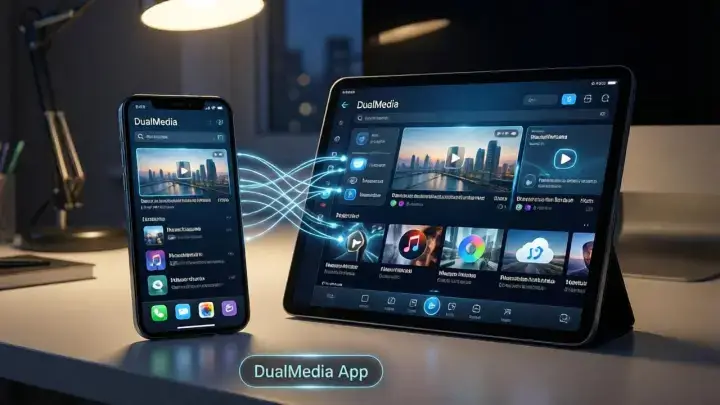

In today’s fast-moving digital environment, mobile applications are no longer just tools for communication or entertainment. They have become powerful ecosystems that combine multiple types of media to deliver rich, interactive, and engaging experiences. One emerging concept in this space is the idea of a application mobile dualmedia, a platform designed to integrate two or more forms of media seamlessly within a single mobile interface.
The growing demand for such applications is driven by users who expect flexibility, speed, and immersive content delivery. Whether it is combining video with interactive text, audio with visual storytelling, or live streaming with real-time engagement tools, application mobile dualmedia are reshaping how digital content is consumed and created.
This article explores the concept in depth, covering its structure, features, benefits, real-world applications, development approach, and future potential. It also explains why such applications are becoming increasingly important in modern digital ecosystems.
Understanding the Concept of application mobile dualmedia
A application mobile dualmedia refers to a mobile platform that integrates two complementary media formats into a unified experience. Instead of focusing on a single content type, it allows users to interact with multiple media streams simultaneously or interchangeably.
For example, a user might watch a video while reading contextual information alongside it, or listen to an audio narration while viewing dynamic visuals. The purpose is not just to display content, but to enhance understanding, engagement, and interactivity.
The core idea behind application mobile dualmedia is synergy. When two media formats work together, the overall user experience becomes more meaningful and impactful compared to traditional single-media apps.
This concept is widely applicable across industries such as education, entertainment, marketing, journalism, and e-learning platforms.
Core Structure of a application mobile dualmedia
A well-designed application mobile dualmedia is built on a layered architecture that ensures smooth performance and seamless integration of multiple media formats. While each application may differ in complexity, most share some fundamental structural components.
At the foundation lies the media processing engine, responsible for handling video, audio, images, and text rendering. Above this layer is the user interface system, which determines how users interact with content.
Then comes the content synchronization module, which ensures that different media types remain aligned. For example, when a video plays, corresponding captions, graphics, or audio commentary must sync perfectly in real time.
Finally, there is the data management layer, which stores user preferences, content libraries, and interaction history.
Together, these components create a smooth and responsive mobile experience that feels natural and intuitive.
Key Features of application mobile dualmedia
One of the most attractive aspects of application mobile dualmedia is their feature-rich environment. These features are designed to enhance usability while maintaining high performance.
A major feature is simultaneous media playback, allowing users to interact with multiple content types at once. For instance, watching a tutorial video while reading step-by-step instructions on the same screen.
Another important feature is adaptive content switching, which enables users to switch between media formats without interrupting the experience.
Interactive elements also play a key role. Many application mobile dualmedia apps include real-time commenting, clickable overlays, and interactive hotspots that enhance engagement.
Personalization is another significant feature. The app can learn user preferences and adjust content presentation accordingly, ensuring a more customized experience.
Offline accessibility is often integrated as well, allowing users to download dual-media content and access it without internet connectivity.
Benefits of Using application mobile dualmedia
The advantages of application mobile dualmedia extend across both user experience and business performance.
One of the most noticeable benefits is enhanced engagement. When users are exposed to multiple media formats at once, they tend to stay more focused and interact more deeply with the content.
Another benefit is improved knowledge retention. Studies in digital learning environments show that combining visual and auditory information helps users understand and remember content more effectively.
From a business perspective, these applications provide stronger audience retention rates. Users are more likely to return to platforms that offer dynamic and interactive content.
They also create better monetization opportunities. Advertisers and content creators can leverage multiple media formats within a single interface, increasing visibility and engagement.
Furthermore, application mobile dualmedia improve accessibility. Users with different preferences or learning styles can choose how they consume content, making the platform more inclusive.
Real-World Applications of DualMedia Mobile Apps
The concept of application mobile dualmedia is not limited to theory; it is actively used in several industries today.
In education, application mobile dualmedia apps are transforming learning experiences. Students can watch lectures while simultaneously reading notes or interacting with quizzes in real time.
In entertainment, streaming platforms are integrating interactive subtitles, behind-the-scenes content, and real-time viewer engagement features.
In marketing, brands use application mobile dualmedia to combine product videos with detailed descriptions, customer reviews, and interactive demos.
Journalism is another area where application mobile dualmedia is gaining traction. News apps now combine live video reports with written analysis and data visualization.
Even in corporate environments, application mobile dualmedia are used for training programs, where employees can watch instructional videos while accessing supporting documentation.
Development Approach for application mobile dualmedia
Creating a application mobile dualmedia requires careful planning and advanced technical execution.
The development process typically begins with requirement analysis, where developers identify the types of media to be integrated and the target audience.
Next comes the UI/UX design phase, which is crucial for ensuring that multiple media elements do not overwhelm the user. Clean layout, intuitive navigation, and responsive design are essential.
The backend development stage focuses on building robust systems for content storage, streaming, and synchronization. This is often the most complex part, as it requires real-time coordination between different media formats.
API integration is also a key aspect, especially when pulling content from external sources or platforms.
Finally, extensive testing is required to ensure smooth performance across different devices, screen sizes, and operating systems.
User Experience and Interface Design Considerations
Design plays a critical role in the success of application mobile dualmedia. Since multiple media types are involved, balancing clarity and usability becomes essential.
A cluttered interface can easily confuse users, so minimalism is often preferred. Designers focus on separating media zones clearly while maintaining visual harmony.
Responsive design ensures that content adapts to different screen sizes without losing quality or functionality.
Another important consideration is accessibility. Features such as adjustable text sizes, audio controls, and caption settings help make the app usable for a wider audience.
Smooth transitions between media elements also contribute to a better experience. Abrupt changes can disrupt engagement, so animations and soft transitions are commonly used.
Monetization Strategies for application mobile dualmedia Apps
From a business perspective, application mobile dualmedia offer multiple revenue opportunities.
Subscription models are commonly used, where users pay for premium access to enhanced content or ad-free experiences.
Advertising is another major revenue stream. Because these apps support multiple media formats, ads can be integrated in creative and non-intrusive ways.
In-app purchases also play a role, especially in educational or entertainment platforms where users can unlock additional content.
Some platforms adopt a freemium model, offering basic features for free while charging for advanced functionalities.
Partnerships with brands and content creators can further increase revenue potential by integrating sponsored content into the dual-media experience.
Future of application mobile dualmedia
The future of application mobile dualmedia looks highly promising as technology continues to evolve.
With advancements in artificial intelligence, content personalization is expected to become even more refined. Apps will be able to predict user preferences and adjust media combinations accordingly.
Augmented reality and virtual reality will also play a significant role, allowing users to experience even more immersive dual-media environments.
5G connectivity will enhance streaming quality, making real-time dual-media interaction smoother and more reliable.
As digital consumption continues to grow, the demand for integrated and interactive media platforms will increase, positioning application mobile dualmedia as a key trend in mobile development.
Security and Data Protection in application mobile dualmedia Apps
Security is a crucial aspect of any application mobile dualmedia, especially those handling large amounts of multimedia data.
Encryption techniques are used to protect user data and ensure secure transmission of media content.
Authentication systems help prevent unauthorized access, while regular updates address potential vulnerabilities.
Privacy settings also allow users to control how their data is used, ensuring transparency and trust.
Conclusion-application mobile dualmedia
DualMedia mobile applications represent a significant evolution in the way digital content is delivered and consumed. By combining multiple media formats into a single, cohesive experience, they offer users a more engaging, informative, and interactive platform.
From education to entertainment and business communication, their applications are diverse and impactful. As technology continues to advance, these applications are expected to become even more sophisticated, integrating smarter systems and richer media experiences.
For developers, businesses, and content creators, investing in application mobile dualmedia platforms can open new opportunities for engagement, growth, and innovation in the mobile digital space.
Frequently Asked Questions (FAQs)
1. What is a application mobile dualmedia?
A application mobile dualmedia is a platform that combines two or more types of media, such as video, audio, text, or images, into a single interactive experience.
2. Where are DualMedia apps commonly used?
They are widely used in education, entertainment, marketing, journalism, and corporate training environments.
3. Do DualMedia apps require high internet speed?
While basic features may work on standard connections, high-quality streaming and real-time synchronization perform better with faster internet.
4. Can DualMedia applications work offline?
Yes, many apps offer offline modes where users can download content and access it without internet connectivity.
5. Are DualMedia apps expensive to develop?
Development cost depends on complexity, features, and technology used. Generally, they require more resources than single-media applications.
6. What makes DualMedia apps different from normal apps?
The key difference is the integration of multiple media formats that work together in a synchronized and interactive way.
7. What is the future of DualMedia mobile applications?
The future includes AI-driven personalization, AR/VR integration, and improved real-time media synchronization powered by faster networks.
For More Visits: Urbanmagazine