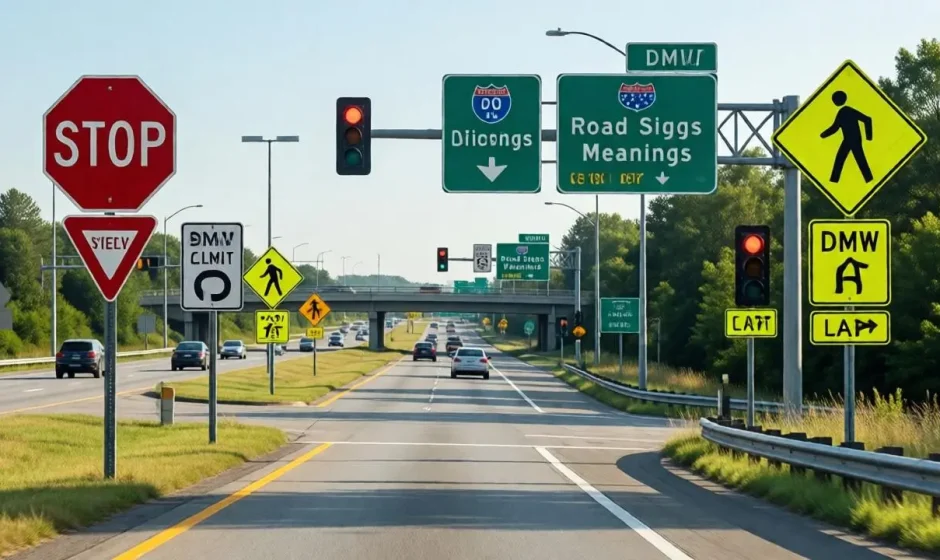

Understanding DMV road signs and meanings is one of the most important parts of becoming a safe and responsible driver. Road signs are designed to communicate important information quickly, helping drivers make better decisions while traveling on streets, highways, and other roadways. Whether someone is preparing for a driving test, renewing a license, or simply improving their driving knowledge, learning the meaning behind different road signs can make everyday driving safer.
Every sign placed on the road has a specific purpose. Some signs warn drivers about upcoming hazards, some provide directions, and others explain traffic rules that must be followed. Ignoring or misunderstanding these signs can lead to dangerous situations, traffic violations, and accidents.
The Department of Motor Vehicles (DMV) in different regions uses road signs as an important part of driver education and testing. Learning these signs helps new drivers understand traffic systems and develop good driving habits.
This detailed guide explains common DMV road signs and their meanings, including warning signs, regulatory signs, guide signs, construction signs, and other important categories every driver should know.
What Are DMV Road Signs?
DMV road signs are official traffic signs used to control, guide, and inform drivers on public roads. These signs use specific colors, shapes, symbols, and words to deliver messages that drivers can understand quickly.
Since drivers often need to make decisions within seconds, road signs are designed to be simple and recognizable. A driver may not have enough time to read a long message while moving at high speed, so symbols and standard designs help communicate information efficiently.
Road signs are an essential part of driving education because they teach motorists how to respond to different situations. From knowing when to stop to understanding lane changes and speed restrictions, road signs help create organized traffic movement.
Why Learning Road Signs Is Important
Knowing DMV road signs and meanings is not only necessary for passing a driving test but also for developing safe driving habits. Every driver shares the road with pedestrians, cyclists, and other vehicles, making awareness extremely important.
A driver who understands signs can anticipate changes on the road and react appropriately. For example, recognizing a warning sign for a sharp curve allows a driver to reduce speed before reaching the dangerous area.
Road signs also help prevent confusion among drivers. Since signs follow standardized designs, motorists can understand them even when traveling in unfamiliar locations.
For new drivers, studying road signs creates confidence behind the wheel. It reduces uncertainty and helps them make safer decisions during real-world driving situations.
Main Categories of DMV Road Signs
Road signs are divided into several major categories based on their purpose. Each category has unique characteristics that help drivers identify the type of information being provided.
Regulatory Signs
Regulatory signs communicate traffic laws and rules that drivers must follow. These signs are usually mandatory, meaning ignoring them can result in penalties or unsafe driving conditions.
Many regulatory signs use white backgrounds with black or red symbols. These signs tell drivers what actions are allowed or prohibited on specific roads.
Some common regulatory signs include:
Stop Sign
The stop sign is one of the most recognizable road signs. It has a red octagonal shape and requires drivers to come to a complete stop before continuing.
Drivers must stop at the marked line, crosswalk, or intersection area. After stopping, they should check for pedestrians, vehicles, and other road users before moving forward.
Yield Sign
A yield sign tells drivers to slow down and give the right-of-way to other vehicles or pedestrians when necessary.
Unlike a stop sign, a yield sign does not always require a complete stop. However, drivers must be prepared to stop if traffic conditions require it.
Speed Limit Sign
Speed limit signs show the maximum legal speed allowed on a particular road.
These limits are created based on factors such as road design, traffic patterns, nearby communities, and safety conditions. Drivers should always follow posted speed limits and adjust their speed according to weather and traffic.
No Parking Sign
No parking signs indicate areas where vehicles cannot be parked. These restrictions help maintain traffic flow and ensure emergency access.
Drivers should carefully read parking signs because restrictions may vary depending on location, time, and specific conditions.
Warning Signs and Their Meanings
Warning signs alert drivers about possible hazards or changing road conditions ahead. These signs are usually yellow with black symbols and are designed to encourage caution.
Warning signs do not usually create immediate commands but provide important information that helps drivers prepare.
Sharp Turn Sign
A sharp turn sign warns drivers that the road will change direction significantly. Drivers should reduce speed and maintain control when approaching these areas.
Sharp turns can become dangerous when taken too quickly, especially during rain, snow, or poor visibility.
Curve Ahead Sign
A curve warning sign indicates that the road will bend ahead. Drivers should prepare by adjusting their speed and staying within their lane.
Pedestrian Crossing Sign
This sign warns drivers that pedestrians may cross the road in the area. Drivers should slow down and remain alert.
Pedestrian areas are often located near schools, parks, shopping areas, and residential neighborhoods.
School Zone Sign
School zone signs inform drivers that children may be present nearby. These areas often have reduced speed limits during specific hours.
Drivers must use extra caution because children may move unpredictably near roads.
Slippery Road Sign
This warning sign alerts drivers about areas where roads may become slippery due to weather conditions or road surfaces.
Drivers should avoid sudden braking or sharp movements when road conditions are unsafe.
Guide Signs and Their Meanings
Guide signs help drivers navigate roads by providing directions, distances, and location information. These signs are especially useful when traveling unfamiliar routes.
Guide signs commonly use green, blue, or brown colors depending on their purpose.
Highway Direction Signs
These signs provide information about highways, exits, and routes. They help drivers choose the correct direction while traveling.
Drivers should pay attention to these signs early so they can safely prepare for turns or exits.
Destination Signs
Destination signs show the names of cities, towns, attractions, or important locations.
They help drivers understand where they are traveling and estimate distances.
Service Signs
Service signs provide information about nearby facilities such as fuel stations, hospitals, food locations, and rest areas.
These signs are especially helpful during long-distance travel.
Construction and Temporary Road Signs
Construction signs provide information about temporary changes on roads. These signs are usually orange and alert drivers about work zones, lane changes, or workers nearby.
Driving through construction areas requires extra attention because conditions may change quickly.
Common construction signs include:
- Road work ahead signs
- Lane closure signs
- Detour signs
- Flagger warning signs
Drivers should slow down and follow instructions in construction zones to protect workers and other motorists.
Traffic Signal Signs and Meanings
Traffic signals work together with road signs to control vehicle movement at intersections.
Red Light
A red light means drivers must stop. Moving through a red light can create dangerous collisions.
Yellow Light
A yellow light warns drivers that the signal will change soon. Drivers should prepare to stop unless stopping would create a dangerous situation.
Green Light
A green light allows drivers to proceed when the intersection is clear.
Drivers should still check for pedestrians and vehicles before moving forward.
Road Sign Colors and What They Represent
Colors play an important role in helping drivers quickly recognize the purpose of a sign.
Red signs usually indicate stopping, prohibition, or important restrictions.
Yellow signs generally provide warnings about possible hazards.
Green signs usually provide directions or route information.
Blue signs often provide information about services.
Orange signs are commonly used for construction and temporary traffic changes.
White signs often communicate regulations and legal requirements.
Understanding these color patterns makes it easier for drivers to recognize signs quickly.
How to Study DMV Road Signs for a Driving Test
Preparing for a DMV driving test requires more than memorizing names of signs. Drivers should understand what each sign means and how to respond when encountering it.
A good study approach includes reviewing road signs regularly, practicing with sample questions, and observing signs while traveling as a passenger.
Many learners find it helpful to group signs by category instead of memorizing them randomly. Understanding patterns, such as colors and shapes, makes remembering information easier.
Practice is also important because real driving requires quick recognition and proper reactions.
Common Mistakes Drivers Make With Road Signs
Many driving mistakes happen because people ignore or misunderstand road signs.
Some common mistakes include failing to notice speed limit changes, not slowing down for warning signs, ignoring temporary construction signs, and misunderstanding right-of-way rules.
Experienced drivers also need to remain careful because familiarity with roads can sometimes lead to reduced attention.
Following signs consistently helps prevent accidents and creates safer roads for everyone.
Frequently Asked Questions About DMV Road Signs and Meanings
What are DMV road signs?
DMV road signs are official traffic signs that provide instructions, warnings, directions, and information to drivers on public roads.
Why are road signs important for drivers?
Road signs help drivers understand traffic rules, identify hazards, and make safe decisions while driving.
How many types of road signs are there?
Road signs are generally divided into categories such as regulatory signs, warning signs, guide signs, and temporary construction signs.
What does a red road sign mean?
Red road signs usually indicate stopping, restrictions, warnings, or actions that require immediate attention.
What is the difference between a warning sign and a regulatory sign?
Warning signs alert drivers about possible hazards, while regulatory signs communicate laws and rules that drivers must follow.
Are road signs the same everywhere?
Many road signs follow similar designs and meanings, but specific signs and regulations can vary depending on the region.
How can I memorize DMV road signs easily?
Learning signs by category, color, and shape can make memorization easier. Regular practice and observation also improve recognition.
Conclusion
Understanding DMV road signs and meanings is a fundamental part of becoming a skilled and responsible driver. Road signs provide essential information that helps motorists navigate safely, follow traffic laws, and respond properly to changing conditions.
From stop signs and speed limits to warning signs and construction notices, every sign has an important purpose. Learning these meanings improves confidence and reduces the risk of dangerous driving decisions.
Whether preparing for a DMV test or improving everyday driving knowledge, taking time to understand road signs is a valuable investment in road safety. A driver who recognizes and respects road signs contributes to a safer environment for everyone sharing the road.
For More Visits: Urbanmagazine