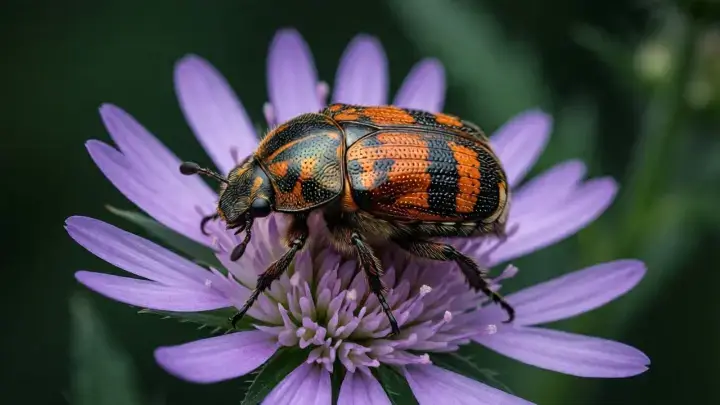

There are some words that become interesting precisely because nobody seems able to agree on what they mean. Boylecheloid is one of them.
Search for the term and the results quickly become confusing. One page may describe it as a mysterious flower. Another may present it as a skin condition involving a boil and a keloid. Another may call it a conceptual or technical phenomenon. Elsewhere, the word appears in generic explanatory articles that offer no identifiable source for its origin at all.
That raises a more fundamental question than “What does boylecheloid mean?”
Where did the word come from in the first place?
The answer is not straightforward, and pretending otherwise would create a misleading story. There is currently no reliable evidence establishing “boylecheloid” as the accepted scientific name of a plant, a recognized medical diagnosis, a documented person, a company, or a standard technical concept.
There is, however, a genuine botanical species that repeatedly appears in online attempts to explain the term: Cosmos bipinnatus, commonly known as garden cosmos. Kew’s Plants of the World Online recognizes Cosmos bipinnatus Cav. as an accepted species in the family Asteraceae, with a native range in Mexico.
But that does not establish that Cosmos bipinnatus is “boylecheloid.”
That distinction is the key to understanding the entire subject.
Boylecheloid at a Glance
| Fact | Details |
|---|---|
| Term | Boylecheloid |
| Established scientific status | Not publicly established |
| Recognized botanical species under this exact name | Not publicly available |
| Recognized medical diagnosis under this exact name | Not publicly available |
| Recognized person or organization | Not publicly available |
| Common online association | Various conflicting descriptions, including a supposed flower |
| Botanical species sometimes associated online with the term | Cosmos bipinnatus |
| Accepted scientific name of that plant | Cosmos bipinnatus Cav. |
| Plant family of Cosmos bipinnatus | Asteraceae |
| Native range of Cosmos bipinnatus | Mexico, according to Kew’s Plants of the World Online |
| Official evidence that “boylecheloid” is a synonym for Cosmos bipinnatus | Not found |
| Current status of the word | An obscure and inconsistently defined online term |
| Most important caution | Online descriptions should not be treated as established scientific definitions |
Why Does “Boylecheloid” Keep Appearing Online?
The first clue is the timing.
Most of the easily discoverable pages using the word are recent web publications rather than established reference works. Several were published during 2025 and 2026, and many repeat similar ideas while presenting them with different degrees of certainty.
That pattern is important because a word can acquire an apparent definition simply through repetition.
Imagine that one website publishes an article claiming that an unfamiliar term refers to a rare flower. Another website finds that article, rewrites the idea, and publishes its own version. A third site does the same thing. Eventually, a search engine may return dozens of pages saying essentially the same thing.
A reader encountering those pages could reasonably conclude that the definition must be established.
But repetition is not the same as independent verification.
That is particularly relevant to boylecheloid. A recent article, for example, claims that the word is not a real botanical name and connects it with Cosmos bipinnatus. Another online article goes further and suggests that the term can be rearranged or interpreted as Cosmos bipinnatus, while providing no recognized taxonomic source for that claim.
The problem becomes obvious when those claims are compared with Kew’s taxonomic record.
Kew lists Cosmos bipinnatus Cav. as the accepted species name and separately records numerous historical synonyms. “Boylecheloid” is not among them.
That does not prove nobody has ever used the word informally.
It does mean there is no basis for presenting it as an established botanical synonym.
Is Boylecheloid a Real Flower?
This is probably the most common interpretation encountered by people searching for the term.
Several websites describe a “boylecheloid flower” as though it were a rare or unusual plant. Some give it colorful physical characteristics, describe unusual petals, or attach symbolic meanings to it.
The difficulty is that those descriptions do not lead back to a recognized botanical classification.
A real plant species generally has a traceable taxonomic identity. It belongs to a genus and family, has a scientific name, and can usually be connected to botanical literature, herbarium collections, taxonomic databases, or other recognized records.
The absence of a record is not automatically proof that something cannot exist. Local plants can be undocumented, cultivated varieties can have informal names, and common names can vary dramatically between communities and languages.
But “boylecheloid” presents a different problem.
The word itself is being presented online as though it were a formal identity, while the authoritative botanical record points elsewhere.
For comparison, Kew’s record for Cosmos bipinnatus provides a complete taxonomic placement: kingdom Plantae, family Asteraceae, genus Cosmos, species Cosmos bipinnatus. It also records historical synonyms and a detailed geographic distribution.
That is what a verifiable botanical identity looks like.
No equivalent taxonomic record has been located for “boylecheloid.”
The Real Plant Behind Some of the Online Claims
If the word is not an established flower name, why does Cosmos bipinnatus appear so frequently in discussions about it?
The answer seems to be a mixture of resemblance, speculation and online repetition.
Cosmos bipinnatus is unquestionably real.
Kew classifies it in the daisy family, Asteraceae, and identifies Mexico as its native range. The species is now introduced or cultivated in many parts of the world. Kew’s database lists records extending across North America, Europe, Asia, Africa and other regions.
It is also visually distinctive.
The plant is known for delicate, daisy-like flower heads and finely divided foliage. Kew’s general-information record describes flower heads generally 3–6 centimeters across, with ray florets that can be pink, reddish pink, purple or white.
Those characteristics make the plant an attractive subject for gardening and ornamental horticulture.
They do not, however, explain the origin of the word boylecheloid.
That is where online explanations tend to move from documentation into speculation.
What We Can Actually Confirm About Cosmos bipinnatus
The botanical evidence becomes much clearer when the mystery word is set aside.
Cosmos bipinnatus is an accepted species.
Its original publication dates to 1791, according to Kew. The species belongs to the family Asteraceae and genus Cosmos.
Kew also records several historical synonyms and taxonomic combinations associated with the species. These include Cosmea bipinnata, Bidens formosa, and other names used in historical botanical literature.
That history illustrates something important about botanical names.
Plant names can change.
Species can be moved between genera. Older names can become synonyms. Different authors can use different classifications before a modern consensus develops.
But these changes are documented.
That documentation is what separates a genuine synonym from an invented or unexplained internet label.
For Cosmos bipinnatus, the taxonomic history is visible in recognized databases. For “boylecheloid,” no comparable chain of botanical evidence has been established.
Why the Cosmos Connection Should Be Treated Carefully
It would be tempting to solve the mystery by saying:
Boylecheloid means Cosmos bipinnatus.
That sentence is attractive because it gives readers a clean answer.
It is also stronger than the evidence allows.
A more accurate statement is:
Some online articles associate “boylecheloid” with Cosmos bipinnatus, but authoritative botanical sources do not establish “boylecheloid” as an accepted name or synonym for the species.
That may sound less exciting, but it is far more useful.
Readers searching for an actual flower should be able to distinguish the verifiable plant from the unverified label.
If what they are looking for is the plant described in those articles, Cosmos bipinnatus is a real species they can research independently. Kew provides a recognized taxonomic record, while Wikipedia also identifies Cosmos bipinnatus as garden cosmos and documents its history and distribution.
The word “boylecheloid,” by contrast, remains unresolved.
What Does the Word Sound Like?
Part of the fascination may come from its construction.
“Boylecheloid” looks scientific.
The ending “-oid” is common in scientific terminology and generally suggests resemblance or similarity. Words ending in “-oid” appear throughout biology, medicine, geology and other disciplines.
The middle of the word also resembles terminology that a reader might associate with “keloid,” a real medical term describing a type of raised scar.
That resemblance may help explain why some online pages interpret boylecheloid as a combination of a boil and a keloid.
But linguistic resemblance is not proof of etymology.
A word can accidentally resemble established terminology. It can also be deliberately coined. It can emerge from a misspelling. It can be generated as a username, invented for fiction, or created through an online content experiment.
Without a documented first use, author, publication or source explaining the term, its etymology remains uncertain.
Another Online Meaning: Boil and Keloid
The medical interpretation is especially important to separate from the botanical one.
One online page explicitly describes “boylecheloid” as an informal or invented term associated with a boil and a keloid. It says the word is used when people confuse a boil, a keloid, or a raised scar left after a boil.
Another page similarly presents boylecheloid as a term for raised scar tissue following a boil, acne or minor injury, while acknowledging that it is not a standard medical name.
There is no reason to treat those descriptions as a recognized diagnosis.
This distinction matters because skin conditions should not be diagnosed from an obscure internet word.
A boil and a keloid are not interchangeable.
A boil is associated with infection and inflammation, while a keloid is a type of excessive scar formation. A raised area after an injury can have several possible explanations, and the appearance alone may not establish what it is.
So if someone encounters “boylecheloid” while researching a skin problem, the useful step is not to search for a treatment for “boylecheloid.”
The useful step is to identify the actual medical condition.
How One Strange Word Acquired Multiple Meanings
This is where boylecheloid becomes more interesting than the word itself.
The term demonstrates how the internet can create semantic drift.
Semantic drift occurs when a word’s meaning changes, expands or becomes ambiguous as different communities use it.
A traditional word might begin with one meaning and gradually acquire another.
Online, that process can happen much faster.
A typo becomes a search query.
The search query becomes a blog title.
The blog title becomes another article.
That article becomes a source for another writer.
Soon the word has an apparent history that is actually a chain of secondary references.
Boylecheloid appears to fit this broader pattern.
There are flower explanations.
There are medical explanations.
There are generic conceptual explanations.
There are pages that describe it as fictional.
There are pages that simply repeat the word while admitting that its meaning is uncertain.
Those interpretations cannot all be simultaneously treated as an established definition.
The Problem With Treating Search Results as Encyclopedias
Search engines are designed to help people find information.
They are not necessarily telling users that every result represents an independently verified fact.
That distinction becomes particularly important for obscure queries.
For a famous scientific species, hundreds of years of botanical literature may exist.
For an obscure internet term, the search results may be dominated by newly published articles.
The difference is enormous.
Suppose ten websites publish the sentence that boylecheloid is a rare flower.
A reader may count ten results and conclude that there are ten sources.
But if all ten websites are relying on the same unsourced article, there may really be only one original claim.
The number of pages does not establish the number of independent witnesses.
This is why the phrase “according to several websites” can sometimes be misleading. Ten websites repeating one claim do not necessarily provide stronger evidence than the original page.
Could Boylecheloid Be a Misspelling?
That possibility cannot be ruled out.
Search behavior creates enormous numbers of spelling variations.
A person may hear an unfamiliar term, remember it incorrectly, and search for an approximate spelling. A typo can then become visible to other users because search engines learn from what people type and because websites begin publishing content around unusual queries.
“Boylecheloid” itself has a structure that could plausibly have emerged from a distorted word or combination of words.
But there is no reliable evidence establishing the exact original spelling from which it came.
It would therefore be irresponsible to announce a definitive etymology.
Instead, the safest description is that the term’s origin is not publicly established.
That is not a failure of research.
It is the correct conclusion when evidence runs out.
Could It Be an Internet-Born Name?
Yes, that is another plausible explanation.
The internet produces new words constantly.
Some are usernames.
Some are fictional concepts.
Some are inside jokes.
Some are generated for creative projects.
Others begin as deliberately mysterious terms designed to attract attention.
Once a strange word begins appearing in search results, it can acquire a life of its own.
The word does not need to have an established meaning before people start searching for it.
In fact, ambiguity can be part of what makes an unusual term searchable.
The current evidence does not establish that boylecheloid was intentionally created as a fictional or marketing term. But the possibility helps explain why modern search results can contain elaborate descriptions without corresponding entries in traditional reference databases.
What Makes the Flower Explanation So Persistent?
The flower explanation has one major advantage over some of the other interpretations:
There is a real plant available to attach to the story.
Cosmos bipinnatus is visually appealing, widely cultivated and well documented. Kew lists it as an accepted species and records its ornamental and other uses.
That gives writers plenty of genuine information to work with.
Once someone associates the invented or unexplained word “boylecheloid” with cosmos, an entire article can then be built around the real plant.
Descriptions of petal color, growth habit, cultivation and symbolism can all be technically plausible descriptions of Cosmos bipinnatus.
But the fact that the underlying flower is real does not validate the name attached to it.
This is an important distinction for readers.
A true statement about a real plant can be placed inside a false or unsupported story about its name.
The resulting article may look highly authoritative because much of the information is correct.
The weak point is the connection between the word and the plant.
What Does Cosmos bipinnatus Actually Look Like?
Once the unsupported label is removed, the plant itself is fascinating.
Kew’s botanical record describes Cosmos bipinnatus as an annual herb. Its flower heads are generally solitary, and the ray florets can appear in shades including pink, reddish pink, purple and white.
The foliage is another distinctive feature.
Rather than broad, dense leaves, the plant has finely divided, pinnately structured foliage. This gives it the light, airy appearance associated with garden cosmos.
Its flowers are one reason it has become a familiar ornamental plant in gardens well beyond its native range.
Kew records its introduction across numerous regions around the world, including parts of Asia, Europe, Africa, North America and elsewhere.
This is a useful example of how a real botanical story can be more interesting than an invented one.
There is no need to claim that the plant is mysterious or scientifically unknown.
Its actual history—its classification, native range, spread and use as an ornamental—is already substantial.
Why “Rare Flower” Claims Need Extra Caution
Several online descriptions portray boylecheloid as a rare or mysterious flower.
That language should be treated cautiously.
Rarity has a specific meaning in conservation and ecology. A plant’s distribution, population size, habitat requirements and conservation status matter.
A mysterious-sounding name does not make a plant rare.
Nor does a lack of information prove that a plant is endangered.
In the case of Cosmos bipinnatus, Kew records a broad introduced distribution and identifies it as an accepted species. Its database also includes a conservation prediction describing it as not threatened, with confident prediction.
Therefore, claims that a supposed “boylecheloid flower” is an exceptionally rare botanical treasure should not be transferred automatically to Cosmos bipinnatus.
The evidence simply does not support that leap.
What Readers Should Do With Conflicting Definitions
When an unfamiliar term produces contradictory search results, there is a simple research strategy.
Start with the most authoritative sources available for the claimed subject.
If the term is supposed to be botanical, check recognized botanical databases.
If it is supposed to be medical, check medical terminology and clinical references.
If it is supposed to be a person, look for primary or reputable biographical records.
If it is supposed to be a company, look for official corporate information.
Then compare those records against the claims made by blogs and social-media posts.
In the case of boylecheloid, that process produces a revealing result.
The word itself does not have a clearly established authoritative identity.
The flower most commonly connected to it online, Cosmos bipinnatus, does have one.
That is the line readers should keep in mind.
Is There a Wikipedia Page for Boylecheloid?
There is no established Wikipedia entry for “boylecheloid” that provides an authoritative definition.
There is, however, a Wikipedia page for Cosmos bipinnatus, the genuine plant sometimes connected with the term online. The page identifies it as a species of flowering plant and gives its common names, classification and distribution.
That page can be useful for general background, but the stronger taxonomic reference is Kew’s Plants of the World Online, which provides the accepted name and detailed taxonomic information.
This difference illustrates another useful research principle: not every source has the same authority for every question.
Wikipedia can be an excellent starting point.
A specialized taxonomic database is generally more appropriate for confirming a botanical name.
Why This Matters Beyond One Strange Keyword
At first glance, boylecheloid may seem like a trivial internet mystery.
It is not.
The term demonstrates a much broader problem in online information: how quickly uncertainty can become apparent certainty.
A reader sees a polished page.
The page uses scientific-sounding language.
It includes headings, bullet points and detailed descriptions.
It may even contain references to genuine plants, diseases or scientific concepts.
The overall presentation feels authoritative.
But authority does not come from formatting.
It comes from evidence.
A well-designed article can still contain an unsupported premise.
That is why obscure topics require more skepticism, not less.
When information is scarce, the temptation is to fill the gaps.
Good research does the opposite.
It marks the gaps.
The Difference Between “Unknown” and “False”
There is another subtle point worth making.
Saying that “boylecheloid” is not established does not necessarily prove that nobody has ever used the word.
The term clearly exists online.
People have published it, searched for it and written explanations around it.
What remains uncertain is what the word originally meant and whether it refers to a real-world entity recognized outside those online discussions.
That is different from saying:
“Boylecheloid is completely fake.”
The available evidence does not justify such a sweeping conclusion either.
A better formulation is:
Boylecheloid is an obscure term with no clearly established authoritative definition, and its online meanings vary substantially.
That statement fits the evidence.
It also leaves room for future documentation.
If a credible botanical publication, medical reference, historical source or original creator eventually explains the term, the story could change.
Why the Word Is Still Worth Investigating
Unusual words often reveal something about the environment in which they circulate.
Boylecheloid sits at the intersection of search culture, online publishing, naming, misinformation and curiosity.
People search because they do not recognize it.
Publishers write because there is interest.
Other publishers find those articles.
The word becomes more visible.
More people search it.
More articles appear.
That cycle can turn a meaningless or poorly documented term into a surprisingly persistent digital phenomenon.
The process is particularly visible when a strange term becomes attached to a genuine subject.
In this case, Cosmos bipinnatus provides a real botanical foundation for some of the online stories. But the foundation should not be mistaken for proof of the label.
For readers interested in flowers, gardening and natural history, the real plant is worth exploring on its own terms. For readers interested in the mystery of the word, the unresolved origin is itself the most honest part of the story.
A broader collection of contemporary culture and lifestyle topics can also be explored through online magazine features, provided the individual subject is checked against appropriate primary or specialist sources.
Could the Meaning Change in the Future?
Absolutely.
Words are not frozen objects.
If a community adopts boylecheloid for a specific purpose, that usage can become established within that community.
A fictional universe could give the word a defined meaning.
A product could be launched under the name.
A researcher could formally coin it.
A plant breeder could use it as a cultivar or trade name.
A medical writer could explain that it was a historical or informal term.
Any of those developments could give the word a traceable identity.
What matters is documentation.
At present, the online record is too inconsistent to justify presenting one interpretation as definitive.
What Should Someone Searching “Boylecheloid” Believe?
The most useful answer is not a dramatic one.
Readers should understand four things.
First, boylecheloid is a real search term but not a clearly established scientific identity.
Second, the word is used online in conflicting ways.
Third, some websites associate it with a flower, particularly Cosmos bipinnatus, but authoritative botanical records do not establish boylecheloid as that plant’s accepted name or synonym.
Fourth, some pages use the word in connection with skin conditions, but it is not established as a standard medical diagnosis.
That may seem less satisfying than a single definitive definition.
It is nevertheless more informative.
Frequently Asked Questions
Is boylecheloid a recognized scientific word?
Not based on the authoritative sources located for this article. The term appears across recent online publications, but no established scientific definition or standard taxonomic identity was found.
Is the boylecheloid flower a real species?
There is no verified botanical species currently established under the name “boylecheloid.” Some online articles associate the term with Cosmos bipinnatus, but Kew recognizes Cosmos bipinnatus under that scientific name and does not list boylecheloid among its documented synonyms.
Is boylecheloid another name for Cosmos bipinnatus?
That claim appears online, but it is not supported by the authoritative botanical record examined here. Cosmos bipinnatus is a genuine accepted species, while “boylecheloid” has not been established as an accepted synonym.
Why do websites describe boylecheloid as a mysterious flower?
Recent websites have published articles presenting the term as a supposed rare or unusual flower. Some appear to connect it with Cosmos bipinnatus. However, the repetition of that explanation online does not establish its botanical validity.
Is boylecheloid a medical condition?
There is no evidence that “boylecheloid” is a recognized medical diagnosis. Some websites use the word informally to describe a raised scar associated with a boil or similar skin injury, but that terminology should not be confused with established medical diagnoses.
What is the real scientific name of the flower sometimes linked to boylecheloid?
The plant most often connected with the flower interpretation is Cosmos bipinnatus Cav. Kew lists it as an accepted species in the family Asteraceae and records Mexico as its native range.
Does Cosmos bipinnatus really exist?
Yes. Cosmos bipinnatus is a documented flowering plant with extensive taxonomic and distribution records. Kew records it as an accepted species and notes its use as an ornamental and its presence in many regions outside its native range.
Where did the word boylecheloid originate?
Its precise origin is not publicly established in the reliable sources located for this article. The term may have emerged through informal online usage, a coined expression, a spelling variation, or another undocumented source, but there is insufficient evidence to identify one explanation as fact.
The Mystery Is the Answer—for Now
So, what is boylecheloid?
The honest answer is that nobody has yet provided a sufficiently reliable, documented definition that can settle the question.
That conclusion may initially feel unsatisfying because the internet offers plenty of confident answers. Some call it a flower. Some connect it to Cosmos bipinnatus. Others use it to describe a skin-related phenomenon, while still more pages treat it as an abstract or fictional concept.
But when those claims are tested against stronger sources, the picture becomes clearer.
There is a real plant called Cosmos bipinnatus. It is accepted by Kew, belongs to the Asteraceae family, has a documented botanical history and is widely known as an ornamental flower.
There is also a real medical vocabulary surrounding boils, scars and keloids, but “boylecheloid” is not established as a standard diagnosis.
And there is an internet term—boylecheloid—that has accumulated several competing meanings without a clearly documented origin.
That distinction is the most important thing to carry away.
A strange word does not automatically represent a hidden species, a rare medical condition or a forgotten scientific discovery. Sometimes the mystery lies not in an undiscovered object, but in the way information travels.
For now, boylecheloid is best understood as an obscure and inconsistently defined online term rather than as a verified scientific name. If the search was prompted by the supposed flower, the reliable trail leads to Cosmos bipinnatus, not to a formally recognized plant called boylecheloid. And if the search came from a medical context, the word should not be used as a diagnosis without identifying the actual condition.
The most interesting question, then, may not be what boylecheloid is.
It may be how a word with no settled definition managed to become searchable in the first place.
For More Visits: Urbanmagazine