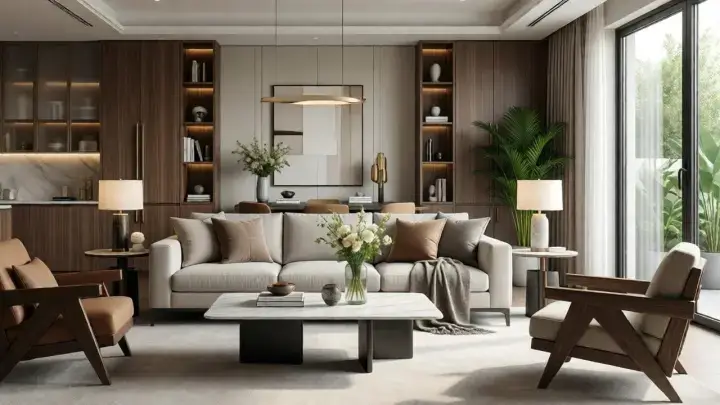

A search for designmode24 design raises a surprisingly important question before anything else: what exactly does the name refer to? At first glance, it sounds like the name of a design studio, a creative platform, an interior-design brand, or perhaps a website offering ideas for modern spaces. The difficulty is that several websites use closely related versions of the DesignMode24 name, making it easy to confuse one online property with another.
That distinction is important because a domain name alone does not tell the whole story. Some similarly named websites describe themselves as home-improvement publications, others present broader design material, and another site using the DesignMode24 name has published articles about web design, technology, interiors, and general lifestyle subjects. There are also domains using variations such as Designmode24 Interior Design.
The exact phrase designmode24 design therefore works best as a starting point for understanding a design-oriented online identity rather than assuming it refers to one universally recognized company or designer. The name itself combines “design,” “mode,” and “24,” creating an impression of an always-available design resource. But the public record is more complicated than the branding suggests.
For readers, the most useful way to approach the topic is to separate the name from assumptions about who operates it, what services it provides, and whether every DesignMode24 website belongs to the same organization. Once those distinctions are made, the subject becomes much easier to understand.
| FactDetails | |
|---|---|
| Full Name | Designmode24 Design |
| Date of Birth | Not publicly available |
| Place of Birth | Not publicly available |
| Nationality | Not publicly available |
| Profession | Design and home-improvement publishing/resource website |
| Famous Role / Known For | Design-related ideas, home improvement, interior styling, and practical design information |
| Years Active | Not publicly available |
| Net Worth | Not publicly available |
| Marital Status | Not applicable |
| Spouse | Not applicable |
| Children | Not applicable |
| Notable Works / Achievements | Publicly presented as a source of design and home-improvement information |
The First Thing to Understand: Designmode24 Is Not One Simple Search Result
The biggest source of confusion surrounding designmode24 design is the existence of multiple domains and publications with almost identical names.
One current website, designmode24-design.com, describes itself as a home-design and home-improvement resource. Its homepage focuses on interior design, kitchens, bathrooms, living rooms, bedrooms, outdoor improvements, DIY projects, and smart-home material.
Another domain, designmode24.com, has a substantially different public presentation. Its homepage mixes interior inspiration, home advice, culinary subjects, tools, technology, and a variety of articles. Its archive also contains material concerning web design and digital subjects.
There is also designmode24interiordesign.com, which explicitly presents itself around modern interior design, home styling, room-by-room inspiration, furniture layouts, storage, renovations, kitchens, bathrooms, gardens, and related subjects.
That means a person searching the general term can encounter different sites while believing they are looking at the same brand.
It is therefore unsafe to take claims published on one DesignMode24 domain and automatically attribute them to another.
Why Similar Names Create So Much Confusion
The name itself is distinctive enough to look like a brand but generic enough to be reproduced in different forms.
“DesignMode24” can be written with or without a space. It can appear with a hyphen. It can be followed by “design,” “interior design,” or another descriptive phrase. A reader who searches only the words rather than a specific domain may encounter several results that look related.
This is particularly relevant when researching ownership, services, locations, contact information, or editorial policies.
For example, one Designmode24 site lists three U.S. locations on its pages, while another similarly named website publishes a separate contact number. Those details should not automatically be treated as evidence that all similarly named sites belong to one business.
The safest approach is to identify the exact domain first.
What Designmode24 Design Appears to Represent
The exact designmode24design.com identity is less extensively documented in the publicly indexed material than some of the other similarly named websites.
Its publicly available Privacy Policy identifies the site as Designmode24 Design and explains that information such as browser type, device type, pages viewed, and time spent on pages may be collected automatically. It also states that direct communications can involve information such as a visitor’s name, email address, and correspondence.
That policy gives us an important piece of information: the website is operating as an online publishing or informational property rather than simply existing as a dormant domain.
However, a privacy policy does not establish the identity of the owner, the size of the organization, the professional qualifications of its contributors, or the financial status of the operation.
Those are separate questions.
This distinction is particularly important with design websites because the word “design” can refer to many different professional activities. Interior design, architecture, graphic design, web design, product design, furniture design, and home-improvement publishing are not interchangeable fields.
Why the Word “Design” Matters Here
Design is one of those words that sounds precise while actually covering an enormous range of activities.
Interior design concerns how spaces are planned, furnished, lit, and visually organized. Architecture addresses buildings and the relationship between structure, function, and environment. Graphic design communicates ideas visually through typography, imagery, layout, and branding. Web design deals with digital interfaces and experiences.
When someone searches designmode24 design, they may therefore be looking for very different things.
The surrounding search terms become important.
A query involving kitchens, bedrooms, color palettes, furniture, room layouts, or home renovation points toward interior and home design. A search mentioning websites, typography, navigation, responsive layouts, or digital interfaces points toward web design.
That is why the phrase should not automatically be interpreted as the name of a specific professional designer.
The Home-Design Interpretation
Among the similarly named websites, the strongest recurring theme is home and interior design.
The Designmode24-design.com site describes coverage of home improvement, interior design, living rooms and bedrooms, kitchens and bathrooms, outdoor improvements, and DIY projects. Its services page also says the publication aims to provide practical guidance for people dealing with everyday home projects.
This approach is different from the glossy image-heavy concept many people associate with interior design.
Instead of treating design as decoration alone, practical home design begins with the way people actually use a space.
A beautiful room can still be frustrating if the furniture blocks movement. A stylish kitchen can become inconvenient if storage is badly positioned. A carefully chosen color scheme can feel wrong if the room receives very little natural light.
Design becomes much more useful when appearance and function are considered together.
When Style Has to Serve Real Life
The practical side of interior design is particularly relevant for ordinary homeowners and renters.
Most people do not live in showrooms. They live with children, pets, work equipment, storage problems, limited floor space, changing routines, and budgets that impose real restrictions.
A useful design resource therefore needs to consider questions that go beyond appearance.
Where should furniture go?
How much walking space is needed?
Which surfaces are likely to receive heavy use?
Will a color still work in evening light?
Is the proposed storage actually accessible?
Does a renovation improve the room or simply add visual complexity?
These questions may sound basic, but they often determine whether a redesign remains useful after the initial excitement disappears.
From Decoration to Problem Solving
The most interesting interpretation of designmode24 design is not simply “decorating ideas.”
Good design is essentially problem solving.
Imagine a narrow living room. The problem may not be that the room is unattractive. The problem may be that the furniture creates a bottleneck, there is nowhere to place everyday objects, and the lighting leaves one side of the room dark.
Changing the furniture arrangement can address all three problems without requiring a major renovation.
The same principle applies to kitchens.
A kitchen redesign is not only about cabinet colors or countertop materials. The position of preparation surfaces, appliances, storage, lighting, and circulation can determine whether the room feels effortless or frustrating.
This is where design becomes practical rather than purely visual.
What Makes an Interior Feel Designed?
A room does not necessarily need expensive furniture to feel intentional.
Proportion is often more important.
A small sofa in an oversized room can make the space feel strangely empty. Oversized furniture in a compact room can make it feel crowded. A rug that is too small may visually disconnect the seating area. Lighting fixtures that are poorly scaled can become distracting.
Color relationships matter as well.
A room can use a restrained palette and still have depth if textures, materials, and tonal differences are introduced carefully. Conversely, a room filled with different colors may feel chaotic if there is no relationship between them.
These principles help explain why design websites remain popular even when readers are not planning expensive renovations.
People often want to understand why a space feels right, not simply copy a photograph.
Designmode24 and the Appeal of Room-by-Room Thinking
A room-by-room approach makes design information easier to use.
The requirements of a bedroom are different from those of a kitchen. A bathroom has completely different material and maintenance considerations from a living room. Outdoor spaces introduce weather, drainage, planting, and durability into the discussion.
The similarly named DesignMode24 Interior Design site organizes its material around individual rooms and spaces, including living rooms, kitchens, bathrooms, home offices, entryways, dining rooms, laundry rooms, children’s rooms, balconies, patios, and outdoor areas.
That structure reflects a basic truth about residential design: there is no single solution that works equally well everywhere.
A successful bedroom may prioritize calm and storage.
A home office may prioritize lighting and ergonomics.
A kitchen may prioritize workflow and cleaning.
An entryway may prioritize organization because it handles the transition between outside and inside.
Thinking in those terms turns design from a vague aesthetic exercise into a series of manageable decisions.
The Small Changes Can Matter More Than the Big Ones
Not every design improvement requires demolition.
Changing lighting can alter the mood of a room without changing its architecture. Moving furniture can improve circulation. Replacing hardware can refresh cabinets. Introducing better storage can reduce visible clutter. A new rug can define a seating area. Repainting a room can change how its proportions appear.
This is one reason practical design publications appeal to a broad audience.
Major renovations are expensive and disruptive. Small improvements allow people to experiment.
The idea is not that every inexpensive change will transform a room. Rather, thoughtful small changes can sometimes solve the specific problem that made the room feel unsatisfactory in the first place.
What “Modern” Design Actually Means
Another common misunderstanding is that modern design simply means using whatever style is currently popular.
In design discussions, “modern” can refer to a specific aesthetic tradition, while “contemporary” generally describes what is current or recent. The two terms are often used interchangeably in everyday conversation, but they do not always mean exactly the same thing.
A room does not become successful simply because it contains current colors or fashionable furniture.
Trends change.
Function lasts longer.
A good design decision should therefore be evaluated against the space, the people using it, and the expected lifespan of the materials.
This is particularly important for expensive purchases.
A trend-driven chair can be replaced relatively easily. Flooring, cabinets, tile, lighting infrastructure, and major fixtures are much harder to change.
Design and the Psychology of a Room
People often describe rooms emotionally.
A bedroom can feel peaceful.
A hallway can feel cramped.
A living room can feel welcoming.
A workspace can feel distracting.
These reactions are influenced by design choices.
Natural light, color, ceiling height, furniture arrangement, visual clutter, sound, and material texture can all influence how a space is experienced.
This is one reason design is more than decoration.
A room is experienced over time. Its success depends partly on what it allows people to do and how easily they can move through it.
A design resource that discusses function alongside appearance is therefore addressing a deeper issue than simply choosing attractive objects.
Where Home Improvement Fits Into the Picture
Interior styling is only one part of home improvement.
Home improvement can include repairs, maintenance, remodeling, insulation, flooring, lighting, landscaping, storage, and countless smaller changes.
The Designmode24-design.com service structure places home improvement alongside interior design, outdoor improvements, kitchens and bathrooms, living spaces, and DIY projects.
That combination makes sense because these categories overlap constantly.
Changing a kitchen may involve both structural work and styling.
Improving a backyard can involve both landscaping and outdoor furniture.
Updating a bathroom can involve plumbing, surfaces, lighting, storage, and color.
The best design decisions are often made when these elements are considered together rather than treated as isolated subjects.
The Difference Between Inspiration and Instruction
There is an important distinction between a design photograph and a design guide.
A photograph can show what a finished room looks like.
A guide can explain how the result was achieved.
For readers, the second can be more useful.
A photograph might show a beautifully organized small apartment, but it does not automatically reveal the dimensions of the furniture, the storage strategy, the lighting arrangement, or the compromises required to achieve the look.
That is why practical design writing has value even in a world filled with visual inspiration.
The image creates the desire.
The explanation provides the path.
Why Readers Should Separate Inspiration From Professional Advice
A design website can provide excellent ideas without replacing a licensed professional.
This distinction becomes important when projects involve structural changes, electrical work, plumbing, gas systems, building regulations, or other specialized areas.
A homeowner might discover a useful concept online and then need an architect, engineer, contractor, electrician, plumber, or other qualified professional to determine whether it can safely be implemented.
The internet is particularly good at showing possibilities.
It is not automatically a substitute for site-specific professional assessment.
That principle applies to Designmode24 just as it applies to any other general-interest design publication.
The Problem With Assuming Every Designmode24 Website Is Connected
This is perhaps the most important factual caution surrounding the keyword.
There are multiple DesignMode24-branded websites with different domains and different public descriptions.
One site presents itself as a home-improvement resource. Another has a broad collection of design, lifestyle, tools, and technology material. Another specifically brands itself around interior design.
Because the names are so similar, information can easily migrate from one discussion to another without adequate verification.
A location shown on one website should not automatically be attributed to another.
A service listed on one domain should not automatically be assumed to exist on another.
An article author’s identity on one site does not establish ownership of another site.
This may sound obvious, but it is exactly the type of mistake that happens when similarly named online properties are treated as one organization.
What the Public Privacy Information Tells Us
The Privacy Policy for designmode24design.com offers limited but useful information about the website’s operation.
It says that technical details such as browser type, device type, viewed pages, and time spent on pages may be collected. It also discusses information submitted directly through communications and describes the use of cookies and third-party tools.
The policy also states that it may be updated as the website changes.
That is normal for an online publication.
However, it is important not to overread such a document.
A privacy policy can explain intended data practices, but it does not independently prove the identity of the site’s operators, the quality of its editorial process, or the accuracy of individual design recommendations.
Those questions require separate evidence.
How to Read Designmode24 Content More Critically
Readers can get more value from a design website by asking a few simple questions.
First, is the article describing an aesthetic idea or giving technical instructions?
Second, does the recommendation depend on the reader’s location, climate, building type, or budget?
Third, is the material describing a personal preference or a generally accepted design principle?
Fourth, could the advice involve a safety issue or regulated professional work?
These questions help separate inspiration from instruction.
For example, an article suggesting a particular color combination is largely a matter of taste. Advice about removing a wall is very different because structural conditions must be considered.
Similarly, a recommendation for outdoor plants can depend heavily on climate and soil conditions.
Context matters.
How Design Trends Become Less Important Over Time
Design websites naturally discuss trends because readers are curious about what is new.
But trends have a short lifespan.
A material can become fashionable and then disappear. A particular color can dominate social media for a season and then feel dated. Furniture silhouettes can change.
This does not mean trends are useless.
They can introduce new ideas and help people discover styles they would not otherwise consider.
The challenge is deciding which trends fit the underlying architecture and lifestyle of a home.
A timeless room does not necessarily reject trends. It uses them selectively.
The Value of Budget-Conscious Design
One of the more practical directions in contemporary home design is the recognition that good design does not automatically require a luxury budget.
Budget changes the available options, but it does not eliminate design thinking.
A limited budget may encourage better planning.
Instead of replacing everything, a homeowner can identify the weakest part of a room and concentrate resources there.
Perhaps the lighting is poor.
Perhaps storage is the real problem.
Perhaps furniture placement makes the room feel smaller.
Perhaps the walls are visually overwhelming.
Fixing the actual problem can produce a better result than purchasing numerous decorative objects.
That principle is useful regardless of which DesignMode24 website a reader ultimately follows.
Design Is Also About What You Leave Out
One of the easiest mistakes in home decoration is adding too much.
Another lamp.
Another shelf.
Another decorative object.
Another color.
Another texture.
Eventually, the room becomes visually noisy.
Good design often involves subtraction.
Removing unnecessary furniture can reveal floor space. Reducing visual clutter can make storage feel more effective. Simplifying a color palette can make individual features more noticeable.
Minimalism is not the only answer, but restraint is a valuable design tool.
The objective is not to make every room empty.
It is to make every major element earn its place.
How Designmode24 Fits Into a Larger Design Conversation
Online design publishing now sits between traditional magazines, social media, product catalogs, home-improvement communities, and professional advice.
A reader might discover a room idea through a search engine, save a photograph on a social platform, compare products through an online retailer, and then consult a contractor before starting the project.
No single website needs to provide every part of that journey.
Designmode24-style resources can play the role of an accessible starting point.
They can help readers understand terminology, identify possible styles, compare approaches, and develop questions before speaking to a professional.
For broader lifestyle and home-related reading, another publication such as Urban Magazine can provide a different editorial setting for related subjects.
The important point is that readers can use multiple sources for inspiration without assuming that every source performs the same function.
A Useful Way to Think About “Designmode24 Design”
Rather than treating designmode24 design as a single mysterious design philosophy, it is more useful to see the phrase as a search doorway into a cluster of online properties built around design-related subjects.
The exact website matters.
The subject of the individual article matters.
The difference between inspiration and professional advice matters.
And the difference between a site’s branding and independently established facts matters.
Once those distinctions are made, the topic becomes much less confusing.
The recurring DesignMode24 identity is clearly connected with design and home-related content, but the exact scope varies between domains. The public information reviewed does not justify treating all similarly named websites as one company or assuming that a particular founder, designer, location, or financial figure belongs to every DesignMode24 property.
Frequently Asked Questions About Designmode24 Design
What does “designmode24 design” refer to?
The phrase can refer to searches for Designmode24-branded design resources, particularly websites dealing with interior design, home improvement, and related topics. Because several similarly named domains exist, the exact website should be checked before attributing information to it.
Is Designmode24 Design an interior design company?
The public material for the exact Designmode24 Design identity supports a design-oriented online presence, but the available information does not establish that every similarly named DesignMode24 domain represents the same interior-design company.
What subjects are associated with Designmode24?
Across the similarly named websites, recurring subjects include interior design, home improvement, room layouts, kitchens, bathrooms, outdoor spaces, DIY projects, decorating, and related design topics.
Why are there several websites with the DesignMode24 name?
The public web contains multiple domains using variations of the name, including different domain extensions and descriptive additions. Their content and presentation are not identical, so readers should verify the exact domain before assuming they are part of one organization.
Can Designmode24 ideas be used for a real home renovation?
Design articles can provide inspiration and planning ideas, but projects involving structural, electrical, plumbing, gas, or other specialized work may require qualified professionals and location-specific approval or compliance.
Does Designmode24 focus only on expensive homes?
Not necessarily. The home-design material associated with the name includes practical improvements, DIY projects, room updates, and ideas that can be approached at different levels of investment.
Is the person behind Designmode24 publicly identified?
The publicly indexed information reviewed does not establish a verified individual founder or owner for the exact Designmode24 Design identity. Claims about a specific person should therefore be treated cautiously unless supported by direct evidence.
Does the term “design” mean graphic or web design here?
Not necessarily. “Design” is broad, and the strongest recurring context among the similarly named websites is residential and interior design. However, another DesignMode24-branded site has also published web-design and technology material.
What should readers check before using advice from the site?
Readers should consider whether the information is inspirational or technical, whether it applies to their location and building, whether the article is current, and whether a qualified professional should review the proposed work.
Is Designmode24 a single globally recognized design brand?
The available public evidence does not support describing every similarly named DesignMode24 website as one universally established brand. Several distinct web properties use closely related names, making domain-level verification important.
When the Name Matters Less Than the Design Idea
The most useful lesson behind designmode24 design is ultimately broader than a website name.
Design works best when it responds to real conditions.
A room needs to function before it can be photographed beautifully. A kitchen needs to support the people who use it. A bedroom needs to feel comfortable rather than simply fashionable. An outdoor area needs to make sense for its climate and maintenance requirements.
That is why good design tends to survive trends.
The precise identity behind a DesignMode24-branded website may require careful domain-by-domain verification because several similarly named properties exist online. But the broader subject remains straightforward: design is about making choices that connect appearance, function, space, and everyday life.
For anyone searching designmode24 design, that distinction is the best place to begin. Instead of assuming that every result represents the same company or designer, identify the exact website, understand what kind of content it publishes, and then judge each design idea according to the room, the project, and the people who will actually live with the result.
That is where design stops being a collection of attractive pictures and becomes something considerably more useful: a way of making spaces work better.
For More Visits: Urbanmagazine